There is a ceiling to how much money you can make charging by the hour. There are only so many hours in a week, and eventually, clients will balk at an hourly rate that sounds "too high," regardless of how fast or skilled you are.
If you feel stuck, overworked, or underpaid, the problem usually isn't your skill level, it is your pricing model. Here is how to transition from low hourly freelance rates to premium, agency-level pricing strategies that allow you to scale your income.
Escaping the Hourly Trap
When you charge hourly, your interests and the client's interests are fundamentally misaligned. The client wants the project done as fast as possible to save money; you are financially penalized for working quickly.
As you gain experience and buy better tools, a task that used to take you ten hours might now take two. If you charge hourly, you just took an 80% pay cut for being excellent at your job. Transitioning to project-based or value-based pricing fixes this immediately.
When to Raise Your Rates
You should raise your rates the moment you have more work than you can handle. If your schedule is 100% booked for the next month, your prices are too low.
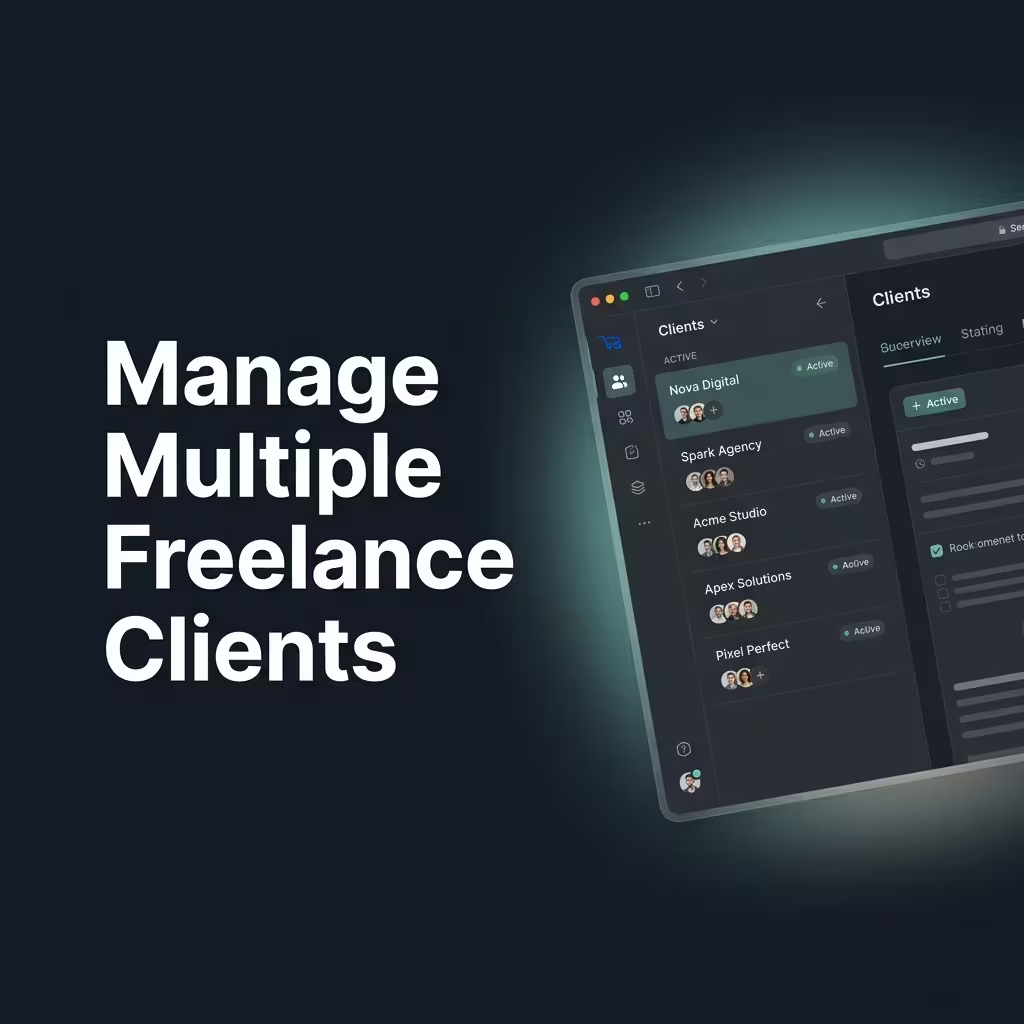
A good rule of thumb is to increase your rates by 15% to 20% for every new lead that comes in while you are at capacity. Yes, you will lose some leads, but the ones you win will be highly profitable. When dealing with these high-ticket clients, ensuring you manage them professionally becomes your primary focus.
The Value-Based Pricing Shift
Agency rates are based on the value delivered, not the time spent. If you build an e-commerce checkout flow that increases a client's revenue by $50,000 a month, that work is easily worth $10,000, even if it only took you five hours to code.
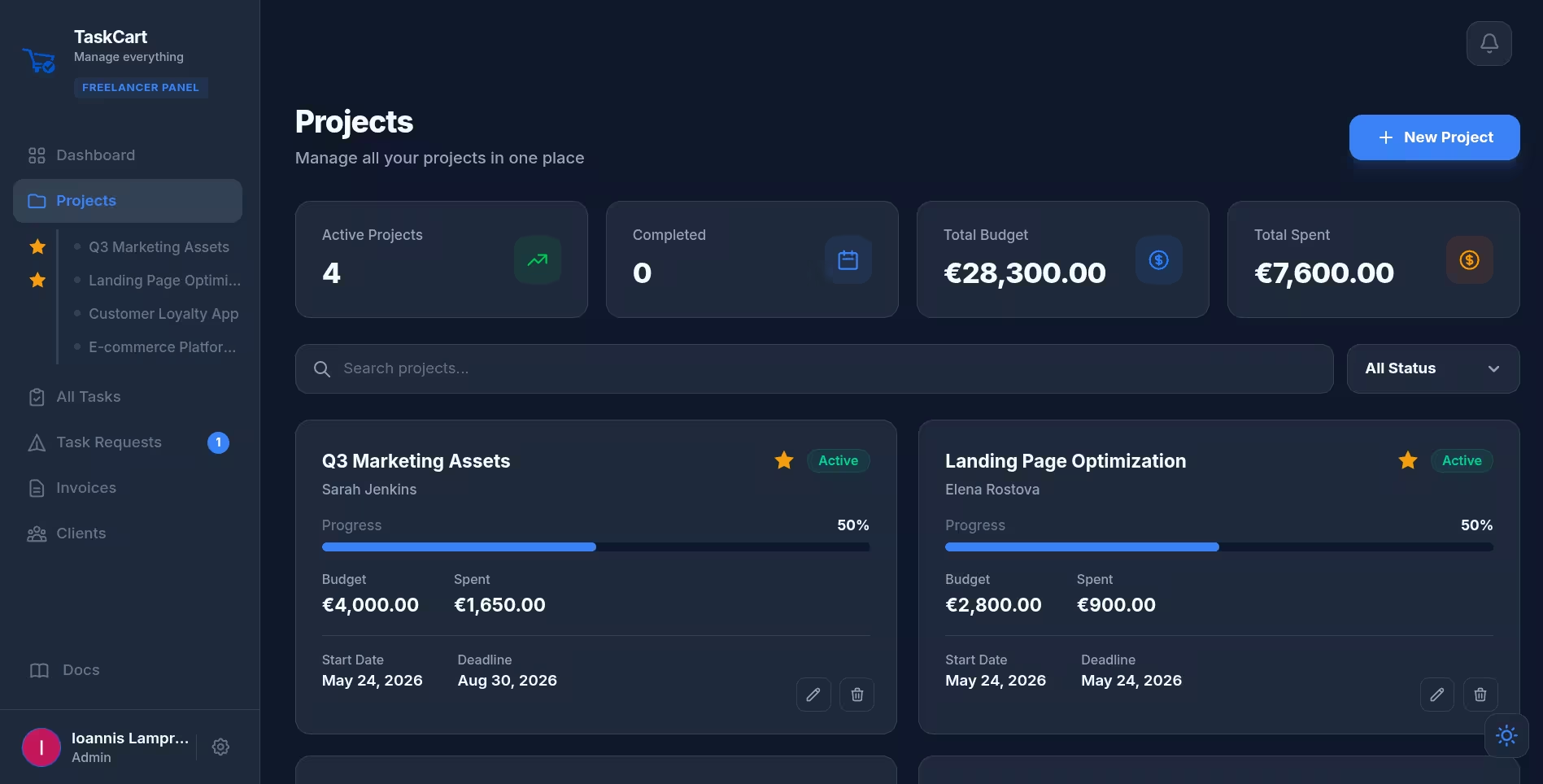
To pull this off, you must get incredibly good at freelance project budget tracking. You need to know your internal effective hourly rate on flat-fee projects to ensure you are actually maintaining healthy margins.
Looking the Part to Justify the Price
You cannot charge agency rates if you send a messy Word document as an invoice. High-paying clients expect a high-end experience.
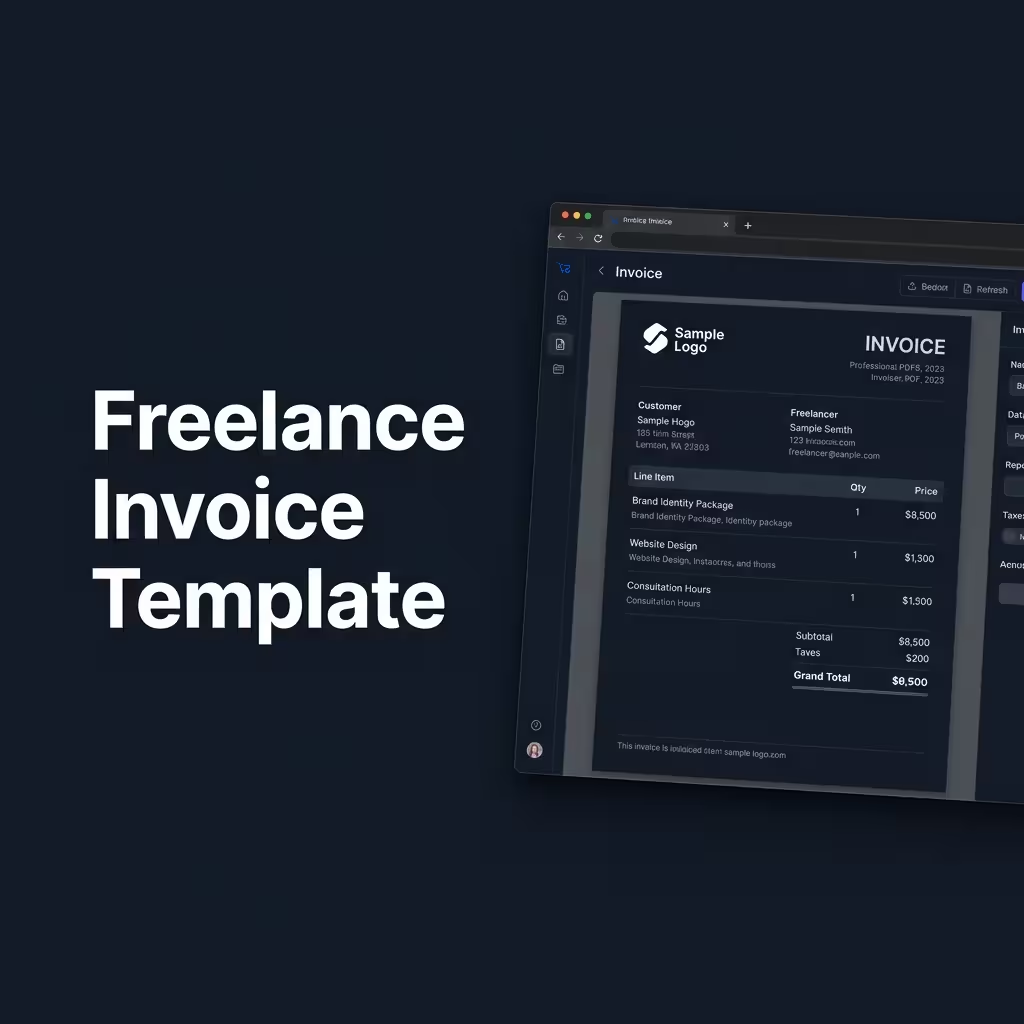
To justify premium pricing, every touchpoint must radiate professionalism. This means utilizing a secure client portal, sending pristine PDF documents (grab our freelance invoice template), and making the payment process utterly frictionless.
Handling the Price Pushback
When you raise your rates, clients will ask, "Why is this so much more expensive than the other freelancer?"
Your answer should never be about your personal bills or hours. It should be about risk reduction. Tell them: "You are paying for certainty. I use professional management systems to guarantee deadlines, provide total transparency into the project's progress, and ensure there are zero surprise fees." When you frame your price as an investment in peace of mind, premium clients will gladly pay it.