Tool fatigue is one of the quietest productivity killers in the freelance world. You sign up for an app to track your tasks, another to send invoices, another to share files, and suddenly you are paying $100 a month just to keep your business running.
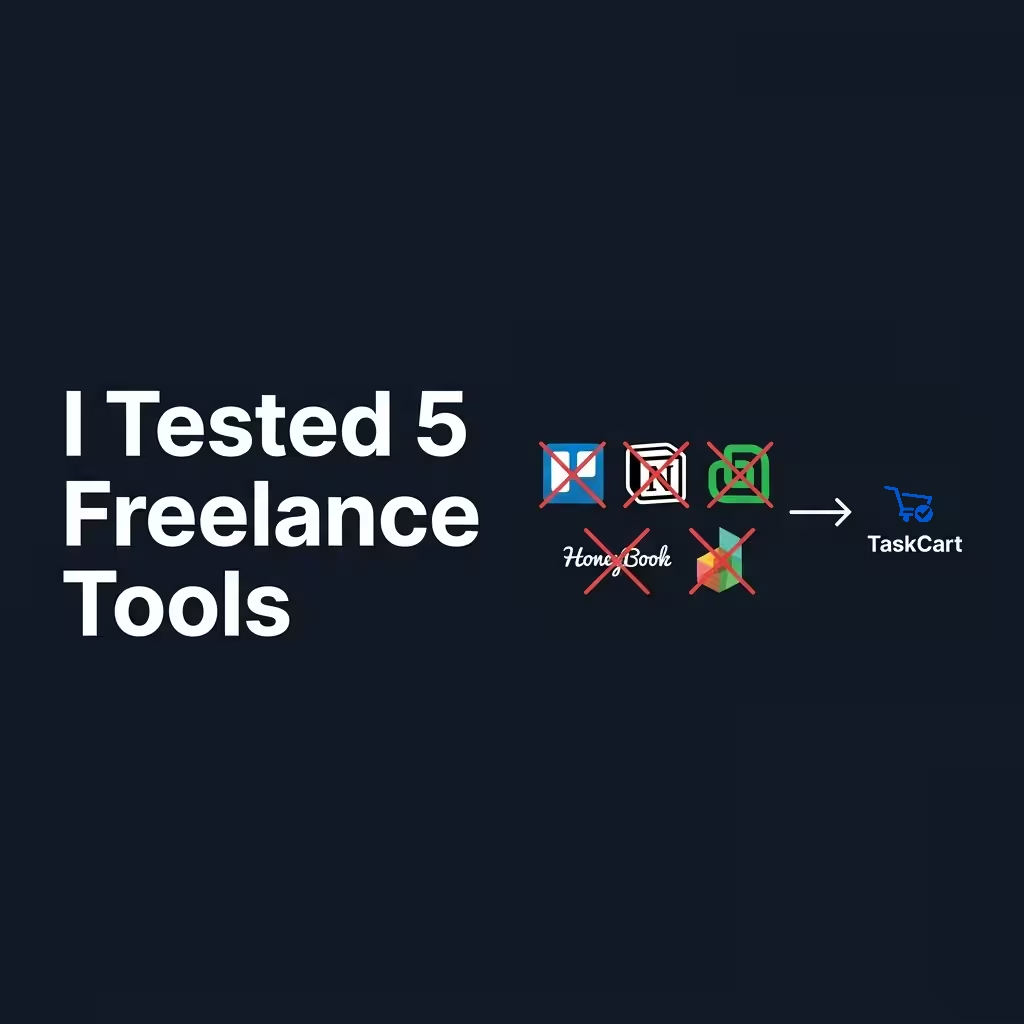
Consolidation is the key to building a streamlined freelance tool stack. To help you find the right foundation for your business, we tested the top five freelance management tools on the market. Here is an honest breakdown of what works, what doesn't, and who each tool is built for.
1. TaskCart (The All-in-One for Digital Professionals)
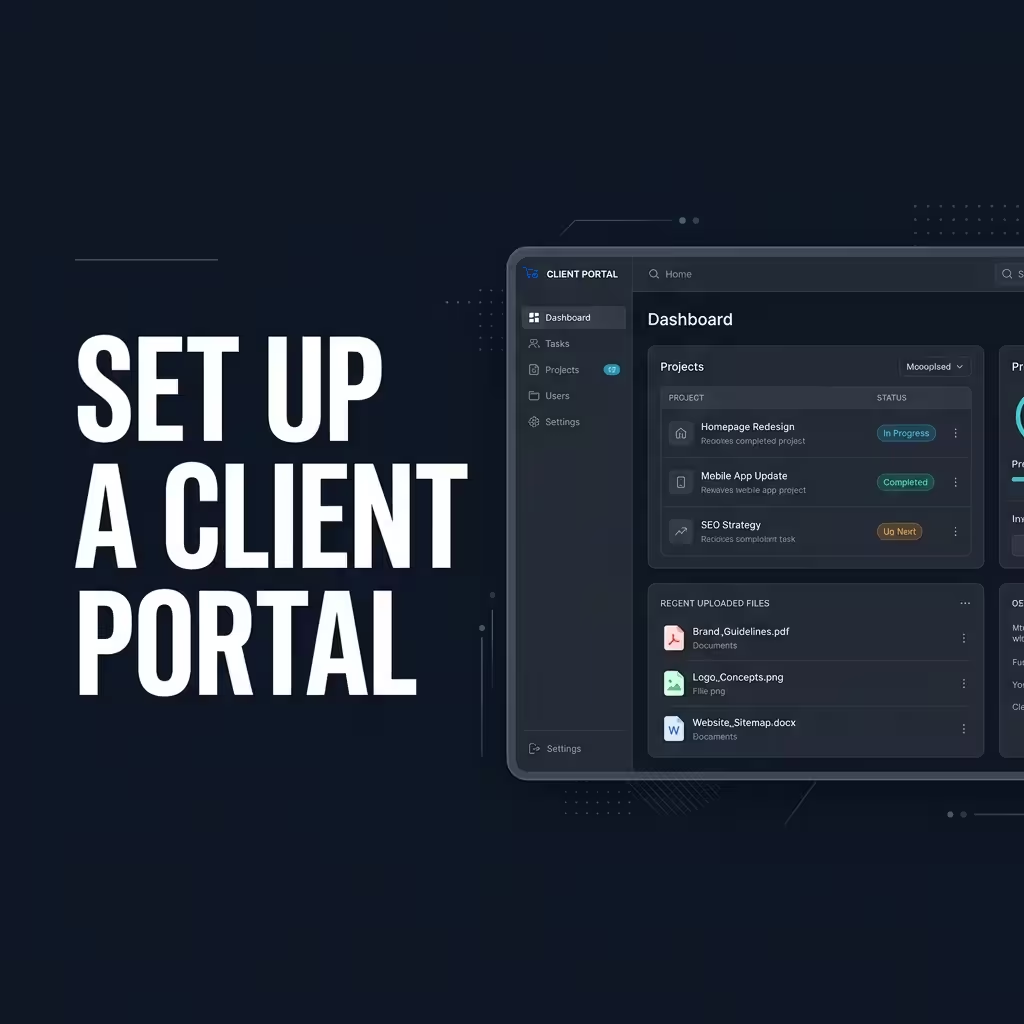
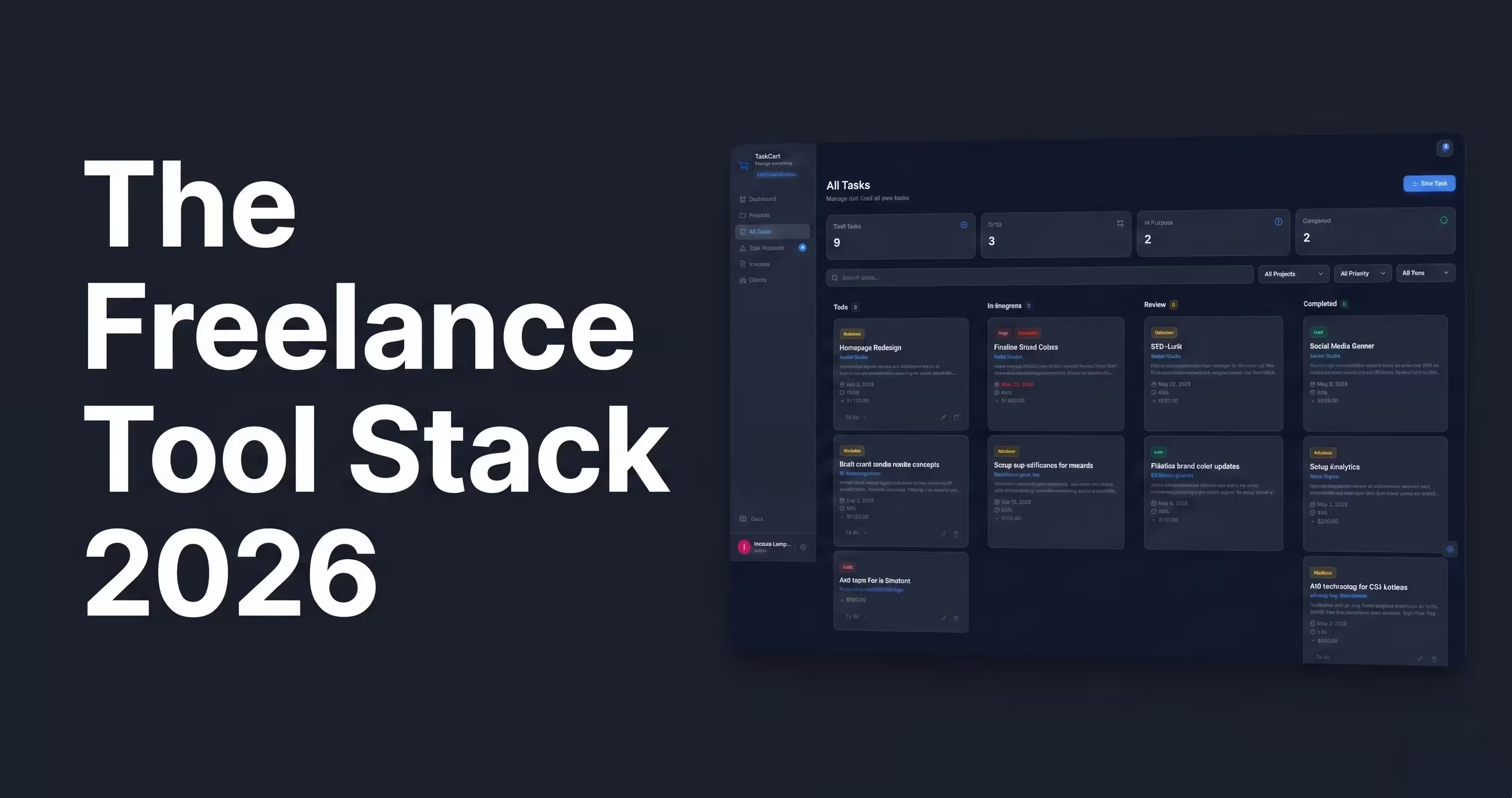
TaskCart was built from the ground up to solve the exact problem of tool fragmentation. It replaces your Kanban boards, invoicing software, and client file sharing with a single, lightning-fast dashboard.
Biggest Strength: The deep integration between project management and billing. In TaskCart, your clients can submit "Task Requests" with suggested budgets. Once you approve the work and move the task to "Done," the system automatically syncs with your Stripe Connect integration to ensure you get paid without lifting a finger.
Best For: Software developers, UX/UI designers, and digital agencies who want a clean, fast, developer-friendly interface without corporate bloat.
2. Bonsai (The Contract Heavyweight)
HelloBonsai has been a staple in the freelance community for years. It is a massive, feature-rich platform that covers everything from lead generation forms to accounting.
Biggest Strength: Their legally vetted contract templates. If your business relies heavily on generating complex, custom legal proposals on a daily basis, Bonsai is fantastic.
The Downside: It has become bloated and expensive. For a solo freelancer who just needs to track projects and send invoices, Bonsai's entry tier is overkill. This is why many lean operators look for a faster Bonsai alternative to handle their daily project operations.

3. HoneyBook (The Creative CRM)
HoneyBook is a deeply stylized CRM designed primarily for event-based creatives. If you are a wedding photographer, florist, or event planner, this tool was built exactly for your workflow.
Biggest Strength: The highly visual client communication flows and beautifully designed brochures.
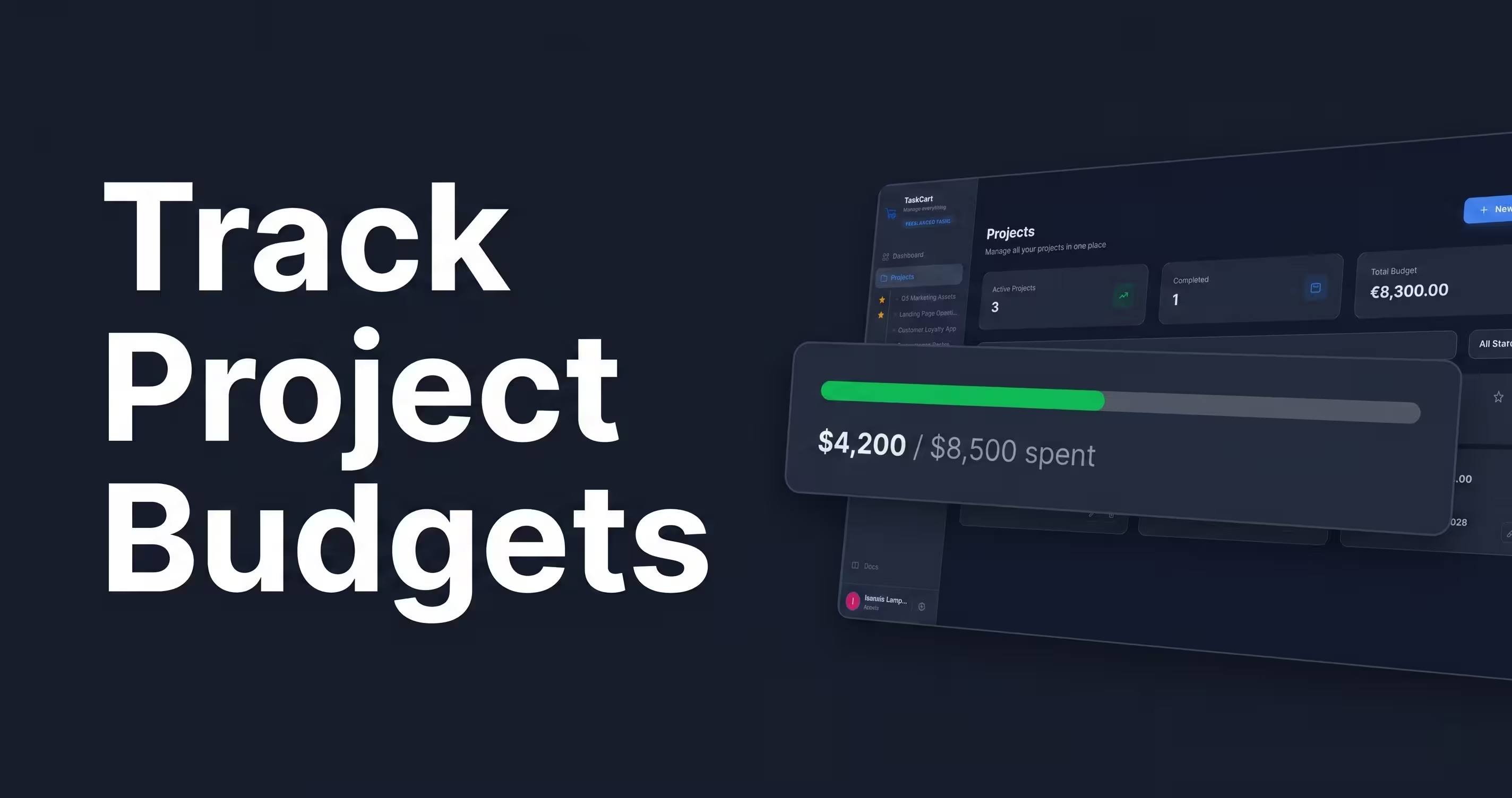
The Downside: It lacks the technical project management features (like precise project budget tracking and technical file hosting) required by web developers and marketing agencies. If you build software or digital products, you will want a HoneyBook alternative that features true Kanban boards and Gantt charts.
4. Dubsado (The Automation Engine)
Dubsado is famous for one thing: insanely complex workflow automations. You can set up multi-step triggers that automatically send a questionnaire, wait three days, send a contract, and trigger an invoice.
Biggest Strength: Total workflow automation for service-based solopreneurs.
The Downside: The setup time is notoriously painful. Users routinely report spending weeks watching tutorials just to configure their dashboard. If you want a system that works out of the box on day one, a Dubsado alternative with pre-built portals is a much safer bet.
5. Notion (The DIY Sandbox)
Notion is an incredible piece of software, but it is a blank canvas. Many freelancers attempt to build their own custom operating system using interlinked Notion databases.
Biggest Strength: Infinite flexibility and wiki building.
The Downside: It doesn't actually process money. You can build a beautiful database to track your clients, but you still have to leave Notion to actually generate a compliant PDF invoice or process a Stripe payment. It is a great documentation tool, but a fragile business management tool.